
Pocket Option Review 2026
Updated: January 2026
How Pocket Option Works in Real Trading
Pocket Option is an online binary options trading platform offering fixed-outcome trades across forex, cryptocurrencies, commodities, and selected equities/indices depending on region. The core mechanic is simple: the trader selects an asset, chooses an expiry time, enters a stake size, and predicts whether price will finish above or below the entry level at expiry.
The defining characteristic of Pocket Option is that it supports a very wide expiry range, from ultra-short durations (as low as 3 seconds) to longer expiries that can extend to around one month depending on the instrument and platform mode.
This means Pocket Option can be used in two very different ways:
as a fast, momentum-driven short-term platform (seconds to minutes), or
as a more structured directional tool (hours to days/weeks)
Understanding which mode fits your style matters more than the headline payout number.
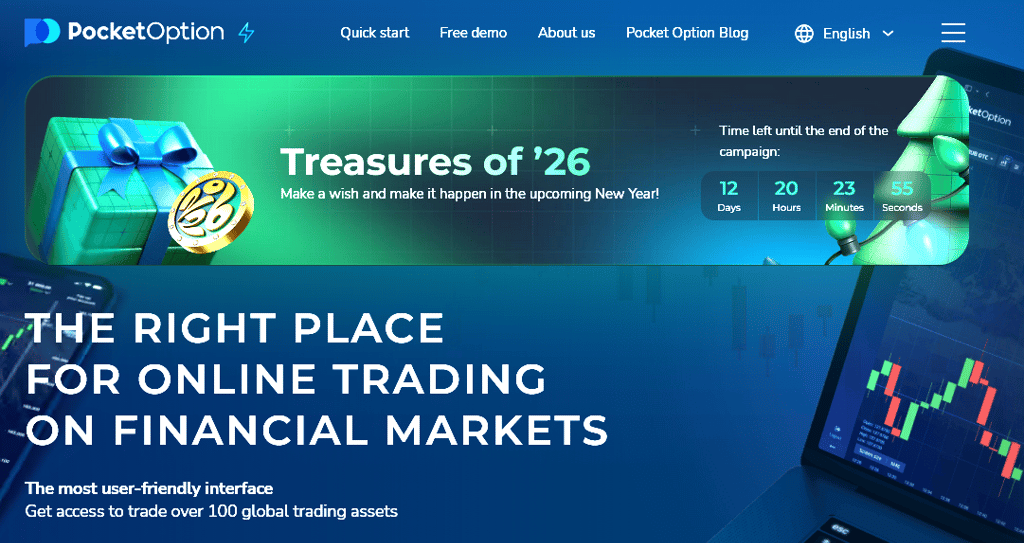

Pocket Option is a feature-rich binary options platform popular among high-frequency and ultra-short-term traders. With 180+ binary assets, expiry times ranging from 3 seconds to 1 month, and a $5 minimum deposit, the broker is designed for fast-paced trading environments.
Beyond asset range, Pocket Option stands out for frequent platform updates and add-on features such as trading signals and automation-style tools. However, more features do not automatically mean better outcomes. The platform’s low friction and fast execution can amplify both gains and mistakes, depending on how trades are managed.
In this review, we break down whether Pocket Option’s speed and flexibility translate into a sustainable trading experience.
What Kind of Broker Is Pocket Option?
Pocket Option is best described as a speed-first binary options broker, designed primarily for short-term and ultra-short-term discretionary trading. Unlike platform-centric or contract-driven brokers, Pocket Option focuses on fast execution, minimal setup, and rapid trade turnover.
In practice, the platform is built around one-click binary execution. Traders select direction, expiry, and stake with minimal friction, making it possible to place trades within seconds. Expiry times can start from as low as 3 seconds and extend up to 1 month, though most activity concentrates on the seconds-to-minutes range. This structure naturally attracts traders who rely on timing, momentum, and quick directional decisions rather than extended analysis.
From a data standpoint, entry requirements are low. Minimum deposits typically start from $5, with $1 minimum trade sizes, allowing small-scale testing. Payouts observed during active sessions commonly range from 70% to around 92%, depending on the asset and market conditions. These figures are competitive, but they also narrow the margin for error—requiring disciplined win-rate management to maintain expectancy.
What defines Pocket Option is not analytical depth or product complexity, but execution speed and accessibility. The platform removes friction, which can be an advantage for experienced short-term traders, but it also increases behavioral risk for those prone to overtrading.
In short, Pocket Option is a broker built for fast decision-making and short-horizon trading. It suits traders who understand the risks of speed and manage them carefully, and it is less suited to those seeking structured analysis, longer trade cycles, or probability-driven contract design.
Pros & Cons
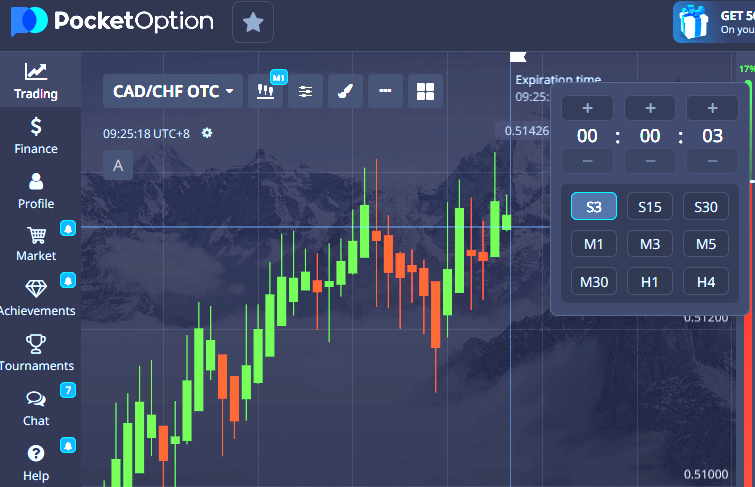
Example of an ultra-short expiry trade (3 seconds) available on Pocket Option.
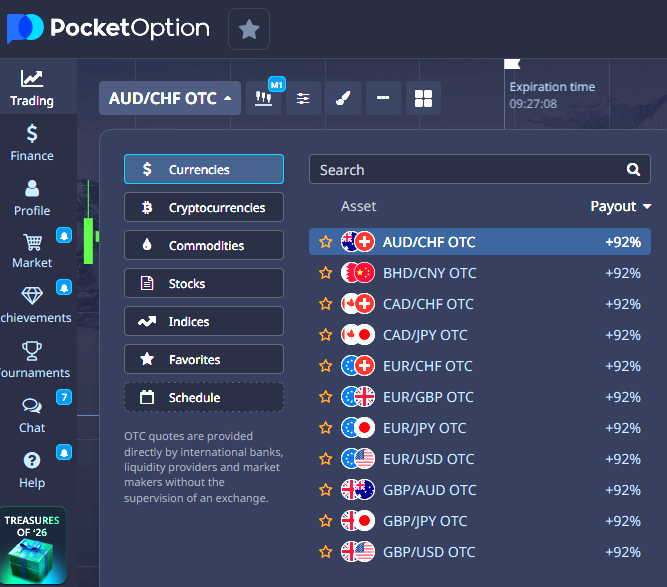
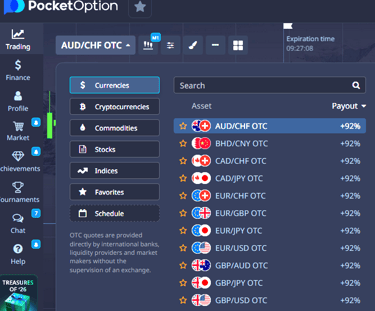
Asset selection menu displaying available forex OTC pairs and indicative payout rates
Assets and Payout
Pocket Option typically provides a wide asset selection across major forex pairs, crypto, commodities, and other categories depending on region. The practical benefit of a large asset list is not variety for its own sake it’s the ability to find instruments with:
stable liquidity
consistent payout behavior
cleaner price action during your trading hours
Payouts vary by asset and market conditions and should be treated as dynamic rather than guaranteed. “High payout” assets may not be high quality if liquidity is weak or price behavior is erratic. Experienced traders often prefer slightly lower payout on cleaner, more stable instruments rather than chasing maximum payout on inconsistent markets.
Pocket Option generally makes payout visibility clear before trade entry. The trader’s job is to treat payout as part of expectancy, not as a reward. If payout drops sharply, it often signals conditions are less favorable or at least less consistent than usual.
Expiry Mechanics
Pocket Option’s expiry range is one of the broadest in this category: 3 seconds to around 1 month (availability depends on asset and platform mode). This range matters because expiry time isn’t just a setting it changes the statistical nature of the trade.
Ultra-short expiries (3–15 seconds) are highly sensitive to micro-movements and noise. Even good analysis can be overwhelmed by random ticks. These trades are typically suitable only for experienced traders who:
understand timing and spread effects,
trade highly liquid instruments, and
use strict risk controls
Short expiries (1–5 minutes) are more structurally tradeable, especially around clear momentum or range behavior, but still demand discipline. Medium expiries (15–60 minutes) allow price action to “breathe,” which often reduces randomness relative to ultra-short durations. Longer expiries (hours to days/weeks) can support directional bias and broader setups, but traders must manage exposure and avoid treating fixed-payout products like long-term investments.
Pocket Option gives traders flexibility across these modes, but the platform does not “protect” users from misusing ultra-short settings. The burden of choosing the correct expiry for a strategy rests entirely on the trader.
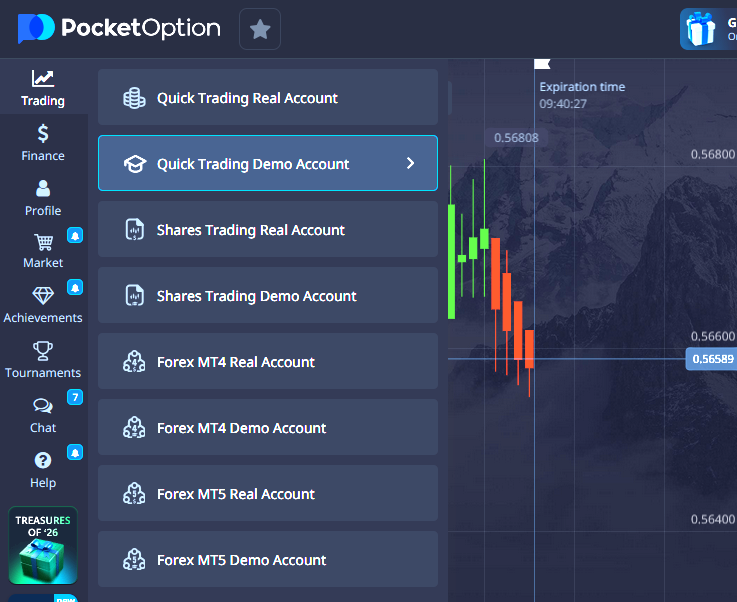
Demo trading mode used to review platform features without risking real funds
Demo Account
Pocket Option offers a demo account, which is essential for learning platform behavior expiry selection, trade settlement logic, and how payouts fluctuate by asset. Demo mode is useful for mastering workflow and reducing execution errors.
Minimum deposit is commonly listed from $5, and minimum trade size is usually $1, making it accessible for testing with limited capital. This low barrier is a double-edged sword. It helps beginners start small, but it can also encourage rapid trial-and-error without a structured plan.
For new traders, the best learning path is not “trade more.” It is:
use demo to learn mechanics
deposit small
trade small
test a withdrawal early
scale only after rules and platform behavior are verified
Pocket Option’s tools can support beginners but the product type remains high risk, and the platform’s speed can amplify mistakes if discipline isn’t present.
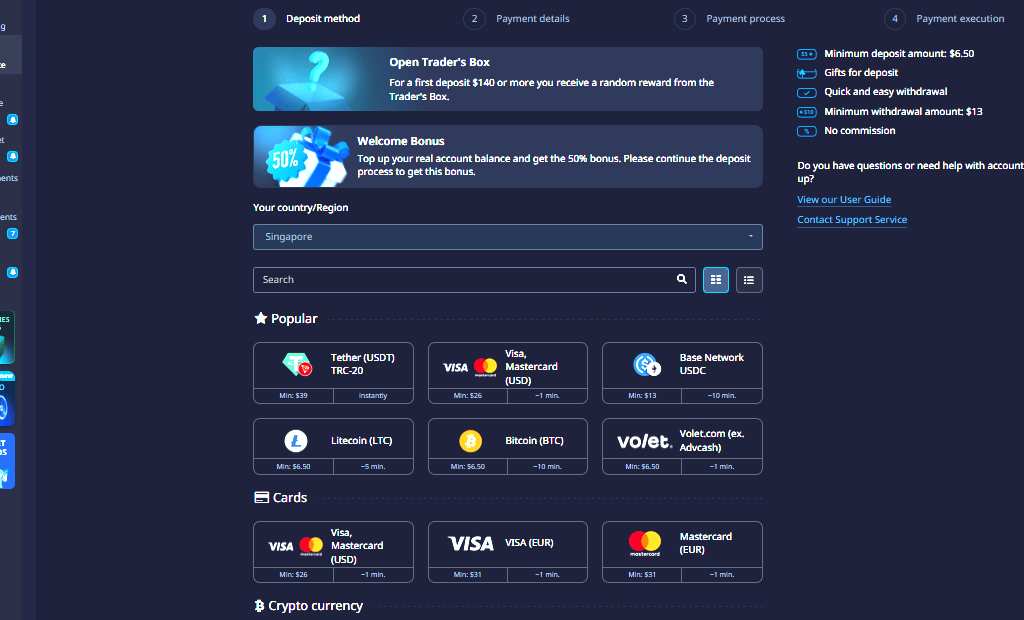
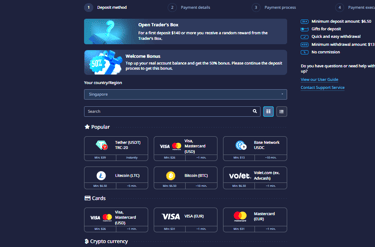
Pocket Option withdrawal and payment methods interface
Deposits and Withdrawals
Pocket Option keeps the entry barrier low, with minimum deposits typically starting from $5 and minimum trade sizes of $1, making it accessible for small-scale testing. Deposits via cards, e-wallets, and crypto are usually processed instantly, allowing traders to move from demo to live conditions without delay.
Withdrawals are more procedural. Identity verification (KYC) is commonly required before the first payout, and processing times vary by method. In practice, e-wallet and crypto withdrawals are often completed within 24 hours, while card or bank transfers may take several business days depending on the provider and region.
During hands-on testing and user feedback review, the most frequent friction point is bonus-related withdrawal restrictions, not technical failures. Traders who accept bonuses may need to meet turnover requirements before funds become withdrawable. Those who start without bonuses, complete KYC early, and request a small test withdrawal shortly after depositing typically experience smoother processing.
The practical takeaway is straightforward: Pocket Option’s deposit flow is fast and flexible, but withdrawals reward preparation. Start small, verify early, test payouts, and only scale once the operational process proves reliable.
Bonuses on Pocket Option
Pocket Option is known for offering frequent deposit bonuses, sometimes ranging from 30% to over 100%, depending on the promotion and account conditions. While these bonuses can significantly increase visible account balance, they come with turnover (trading volume) requirements that directly affect withdrawal flexibility.
In practical terms, accepting a bonus usually means traders must complete a multiple of the bonus amount in trading volume before any bonus-related funds and sometimes even the initial deposit can be withdrawn. For example, a $50 bonus may require several thousand dollars in cumulative trade volume before becoming withdrawable. This structure materially increases exposure and often encourages higher trade frequency.
During testing and user feedback analysis, the most common issue related to bonuses is unexpected withdrawal restriction, not technical errors. Traders who accept bonuses without fully understanding rollover conditions often find themselves locked into extended trading cycles that do not align with cautious testing or capital preservation.
For this reason, many experienced traders choose to decline bonuses during initial platform testing. Trading without a bonus keeps funds fully liquid, allows early withdrawal verification, and makes performance evaluation clearer. Bonuses can be reconsidered later only if the trader fully understands the conditions and has a strategy capable of handling increased volume requirements.
The key takeaway is simple: on Pocket Option, bonuses do not improve trading expectancy. They increase balance, but they also reduce control. For traders prioritizing transparency and flexibility, starting without a bonus is usually the more disciplined choice.
Regulation anh Risk
Pocket Option is widely used, but like many binary options platforms, it does not operate under the same regulatory framework as top-tier investment brokers. This matters because regulation determines the level of investor protection, dispute resolution pathways, and oversight standards.
That said, “unregulated” is not the same as “non-functional.” The platform’s legitimacy is better evaluated by how it behaves in practice:
transparency of trade terms
consistency of platform operation
withdrawal processing under KYC rules
clarity of bonus conditions and account restrictions
For traders, the correct mindset is to treat Pocket Option as a high-risk trading venue not a bank account. Capital exposure should be limited, withdrawals should be tested early, and risk controls must be strict.
Customer Support
Pocket Option provides customer support primarily through live chat and email, with a focus on account access, platform features, and payment-related questions. In practical testing, live chat responses are often quick during active hours, making it suitable for resolving routine issues such as login problems, basic platform navigation, or deposit status.
Support on Pocket Option is operational rather than advisory. Representatives can clarify procedures such as verification steps, bonus terms, or withdrawal status but do not offer trading advice or strategy guidance. This aligns with the platform’s fast-execution design, where responsibility for decision-making remains with the trader.
The most common friction points reported by users tend to involve bonus conditions or verification timing, rather than unresponsiveness. Traders who keep questions specific, complete KYC early, and avoid bonuses during initial testing typically experience smoother interactions.
Overall, Pocket Option’s customer support is adequate for day-to-day operational needs, but it should be viewed as a help desk not a safety net. Clear expectations and early testing remain the most reliable way to minimize support dependency.
Who Is Pocket Option Best For?
Is Pocket Option Legit for Trading?
Pocket Option is generally considered a legitimate binary options platform in terms of execution and operational mechanics, but legitimacy here should be understood functionally, not as a promise of safety or profitability.
From a trading mechanics perspective, Pocket Option operates on a fixed-return model. Before each trade is placed, the platform clearly displays the expiry time, stake amount, and potential payout. Typical payout levels observed during active sessions range from 70% to over 90%, depending on the asset and market conditions. Once a trade expires, settlement is automatic and rule-based wins and losses are applied exactly as defined.
Operationally, Pocket Option supports real accounts with low entry thresholds, including minimum deposits commonly starting from $5 and minimum trade sizes of $1. A demo account is also available, allowing traders to test execution speed, expiry behavior, and payout variability before committing real capital.
Where nuance is required is regulation. Pocket Option operates under an offshore regulatory structure, meaning it does not offer the same level of investor protection or formal compensation schemes found with top-tier regulated brokers. This does not make the platform illegitimate, but it does shift responsibility toward the trader to manage risk, verify withdrawals early, and avoid assumptions about protection.
In practical terms, Pocket Option is legitimate as a functioning trading platform that executes trades transparently according to stated rules. However, it remains a high-risk environment, especially given its focus on short-term and ultra-short expiries. Traders who approach it with realistic expectations, disciplined position sizing, and early operational testing tend to assess the platform more accurately than those who equate high payouts with safety.
Compare Pocket Option
Ready to Test Pocket Option?
A review provides context, but the most reliable way to evaluate any platform is hands-on testing. Pocket Option offers a demo account and low minimum trade sizes, allowing traders to assess execution, expiry behavior, and withdrawal processing before committing significant capital. If you choose to proceed:
Use the demo account first
Deposit a small amount
Test a withdrawal early
Avoid bonuses during the evaluation phase
Visit Pocket Option to explore the platform under real trading conditions.
⚠️ Risk Disclaimer
Trading digital or binary options involves significant risk and may not be suitable for all investors. Never trade with funds you cannot afford to lose.